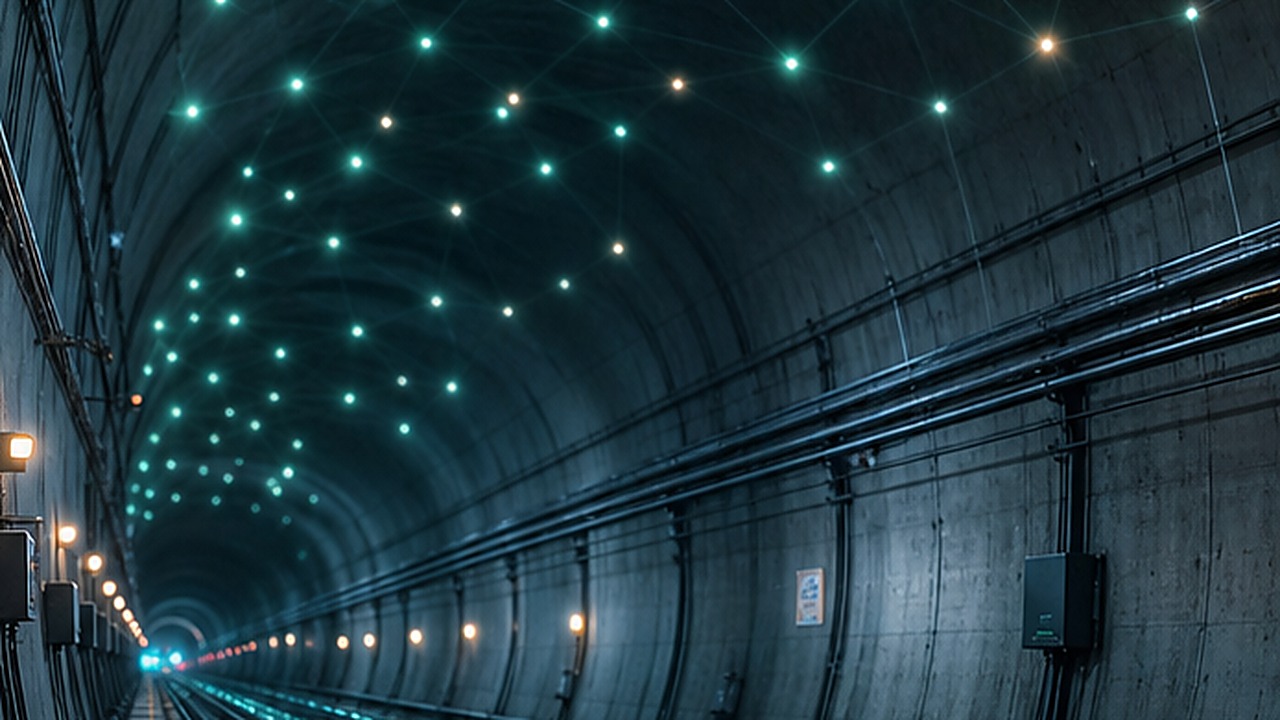
Your tunnel wireless probably works in the lab. Then a train rolls through, and the signal drops.
Subway tunnels are among the most punishing radio environments in all of civil infrastructure. Curved concrete bores bend and swallow signals, path loss climbs steeply the deeper you go, and every passing train acts as a moving wall that can cut a link for seconds at a time. Most off-the-shelf wireless gear was never designed for any of this.
The stakes are higher than dropped data. These same tunnels carry the train control systems that keep passengers safe, and they answer to fire-life-safety codes and federal cybersecurity mandates. A wireless network that interferes with the wrong frequency is not just unreliable. It is a safety problem.
So which technology actually holds up underground? This paper puts the major wireless mesh families, from Zigbee and Thread to LoRaWAN, cellular, and Wi-Fi, through three tests that matter in a tunnel: Can the signal survive the RF environment? Can it scale across miles of linear track? Can it be secured against real, documented threats?
The answer is not the one most vendors sell. It comes down to choosing the right frequency, engineering for the shape of the tunnel, and building security in layers. To pressure-test that conclusion, the paper draws on measured results from more than 3,000 fixtures deployed across three U.S. transit agencies, including what the field data shows after five years in service.
Download the whitepaper to read the full technical and security assessment.